
Custom ERP Development Services
for Your Business
Creative Thoughts Informatics develops custom ERP software to help businesses connect departments, manage operations, and bring important business information into one system. From finance and inventory to procurement, HR, manufacturing, and reporting, we build ERP solutions around your processes and technical requirements.
ERP SOLUTIONS BUILT AROUND
YOUR BUSINESS OPERATIONS
Every business has different workflows, departments, and operational requirements. We develop and improve ERP software to help organizations connect their processes, reduce disconnected systems, and manage business information more effectively.
CUSTOM ERP
DEVELOPMENT
Build an ERP system around your business processes, departments, users, and reporting requirements.
ERP MODULE
DEVELOPMENT
Develop the modules your business needs, including finance, inventory, procurement, HR, sales, manufacturing, and project management.
ERP INTEGRATION
SERVICES
Connect ERP software with CRM systems, ecommerce platforms, payment systems, websites, mobile applications, and other business tools.
ERP
MIGRATION
Plan the transfer of relevant business data, configurations, workflows, and records from an existing ERP to a new or updated system.
ERP
MODERNIZATION
Improve existing ERP software through interface updates, new modules, API development, performance improvements, and system integration.
CLOUD ERP
DEVELOPMENT
Build or modernize ERP applications for cloud environments based on your business, infrastructure, and security requirements.
ERP MAINTENANCE &
SUPPORT
Maintain and improve ERP systems through bug fixes, new functionality, integration updates, performance improvements, and technical support.
ERP CONSULTING &
PLANNING
Assess business processes, identify requirements, and plan ERP modules, integrations, and implementation priorities before development begins.
ERP Modules for Different
Business Functions
A custom ERP system can connect the business functions your organization needs. You can start with the most important modules and expand the system as requirements change.
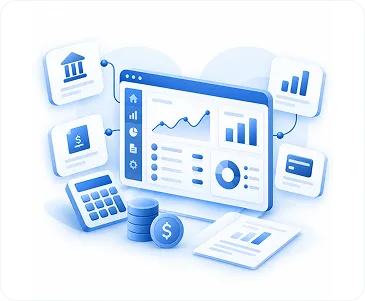
Finance & Accounting
Manage financial records, invoices, expenses, payments, and financial reporting.
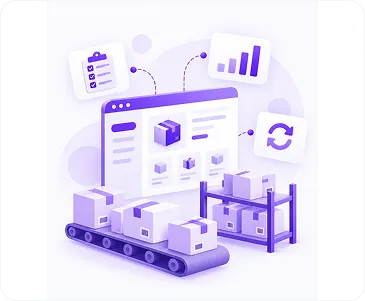
Inventory
Management
Track stock levels, warehouses, transfers, purchase orders, and inventory movements.
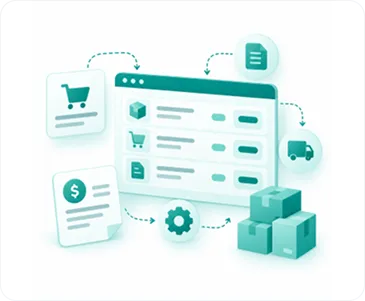
Procurement
Manage purchase requests, supplier information, quotations, approvals, and purchase orders.
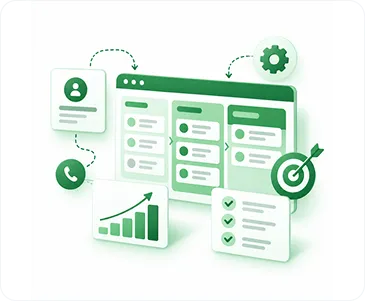
Sales Management
Manage financial records, invoices, expenses, payments, and financial reporting.
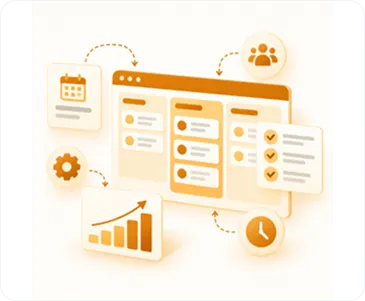
Human Resources
Track stock levels, warehouses, transfers, purchase orders, and inventory movements.
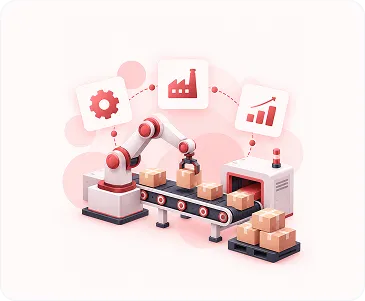
Manufacturing
Manage purchase requests, supplier information, quotations, approvals, and purchase orders.
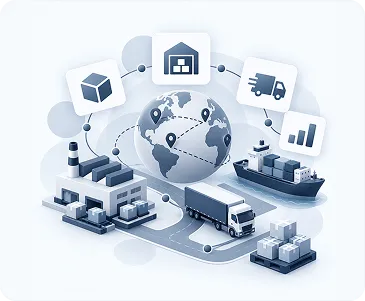
Supply Chain
Management
Manage financial records, invoices, expenses, payments, and financial reporting.
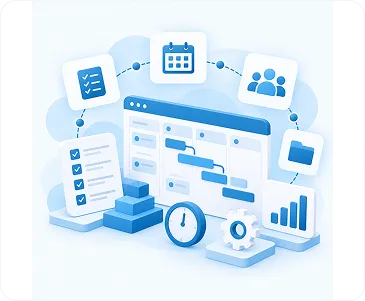
Project
Management
Track stock levels, warehouses, transfers, purchase orders, and inventory movements.
Asset
Management
Manage purchase requests, supplier information, quotations, approvals, and purchase orders.
Business Intelligence
& Reporting
Manage financial records, invoices, expenses, payments, and financial reporting.
ERP Features That Help Your Business
Work Together
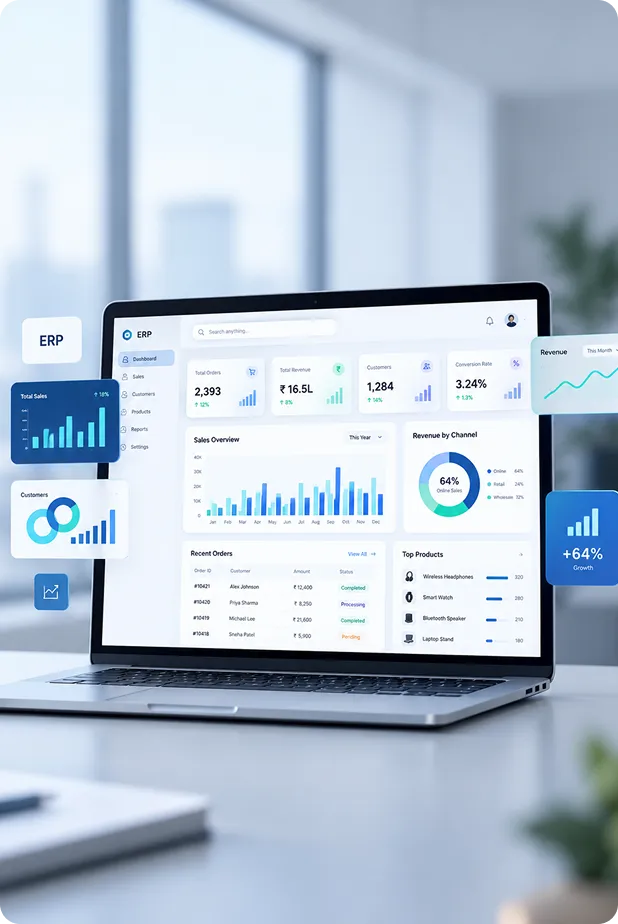
An ERP system needs to connect its modules so that information can move between departments and support everyday operations.
Depending on your requirements, the system can include:
Centralized Business Data
Bring important information into a connected environment.
Role-Based Access
Give employees access to the functions and information relevant to their responsibilities.
Approval Workflows
Manage approvals for purchases, expenses, payments, and other business activities.
Multi-Location Management
Support branches, warehouses, offices, and business units.
Workflow Automation
Automate suitable notifications, routine tasks, and approval processes.
Operational Dashboards
Give teams and managers visibility into important business information.
Audit Trails
Record relevant system activities and changes where required.
Search & Reporting
Help users find information and generate reports.
The final feature set should be based on your business processes, user roles, reporting requirements, and existing systems.
Connect Existing Systems and
Improve Your ERP
Your ERP should work with the other systems your business depends on. When applications remain disconnected, teams may need to enter information repeatedly or combine data manually.
Creative Thoughts Informatics can help you:
We assess the existing technology, integrations, data, and business requirements before recommending whether to extend, integrate, modernize, or replace parts of the system.

Add Practical AI Capabilities to
Your ERP
AI can make ERP systems more useful when it addresses a clear business need and has access to suitable data.
Intelligent Business Search
Help employees find relevant ERP information using natural-language queries.
Document Processing
Extract information from invoices, purchase orders, and other business documents.
AI Business Assistants
Help employees retrieve information and understand business reports.
Automated Reporting
Generate summaries from available operational and financial data.
Demand & Inventory Insights
Use historical data to support planning and inventory decisions.
Workflow Automation
Support repetitive tasks involving documents, text, and business requests.

SHOULD YOU BUILD A
CUSTOM ERP OR USE
READY-MADE SOFTWARE
CUSTOM ERP
- Developed around your business requirements
- Modules can be selected around your needs
- Workflows can be customized
- Integrations can be designed for your systems
- Development scope can evolve with your requirements
OFF-THE-SHELF ERP
- Comes with predefined functionality
- Available modules depend on the product
- Workflows depend on the software's capabilities
- Integration options depend on the product
- Features and updates follow the vendor's roadmap
WHY CHOOSE
CREATIVE THOUGHTS
INFORMATICS?
ERP Development Focused on Your Business Requirements
Business-First Planning
We start by understanding your processes, departments, users, and operational challenges.
Custom Modules & Workflows
We can develop ERP functionality around your business requirements instead of forcing every process into a fixed structure.
Connected Business Systems
We can integrate ERP with CRM, ecommerce, APIs, websites, mobile applications, and other business software.
Modular Development
Where suitable, the system can be developed in stages, starting with priority modules and expanding as requirements evolve.
Design and Development
We consider how employees will use the ERP as well as how the system works technically.
Ongoing Support
We can support maintenance, improvements, integrations, and new functionality after launch.



Explore Our Software Development Work
Explore digital products and software solutions developed by Creative Thoughts Informatics across custom software, web applications, mobile applications, SaaS, ecommerce, and business-focused technology.
Explore Our Case StudiesFREQUENTLY ASKED QUESTIONS
ERP development involves building software that connects business processes such as finance, inventory, procurement, sales, HR, manufacturing, and reporting.
A custom ERP is developed around a business's specific workflows, users, modules, integrations, and reporting requirements.
Custom ERP may be useful when a business has specialized workflows, complex integrations, unique reporting requirements, or processes that standard software cannot adequately support.
Yes. Creative Thoughts Informatics can support ERP planning, architecture, UI/UX design, module development, integrations, testing, deployment, and ongoing support, depending on the project scope.
Yes. ERP and CRM systems can be connected to exchange relevant customer, sales, finance, and operational information.
Yes. Ecommerce and ERP systems can be connected for products, inventory, orders, customers, payments, and fulfillment, depending on the available integrations and requirements.
Yes. ERP migration can involve business data, configurations, users, workflows, historical information, and integrations. The scope depends on the existing system.
Yes. AI can support document processing, intelligent search, business assistants, reporting, workflow automation, and other suitable use cases.
Yes. Depending on the requirements, ERP functionality can be provided through mobile applications or responsive web interfaces.
Yes. Modernization may include interface improvements, API development, integrations, cloud migration, performance improvements, new modules, and workflow updates.
The timeline depends on the number of modules, departments, users, integrations, data migration requirements, and technical complexity. A more accurate estimate can be provided after reviewing the scope.
The cost depends on the modules, workflows, integrations, users, infrastructure, security requirements, and development scope. A project-specific estimate requires an understanding of your business requirements.
Yes. We can support maintenance, new modules, integrations, performance improvements, modernization, and ongoing technical changes.